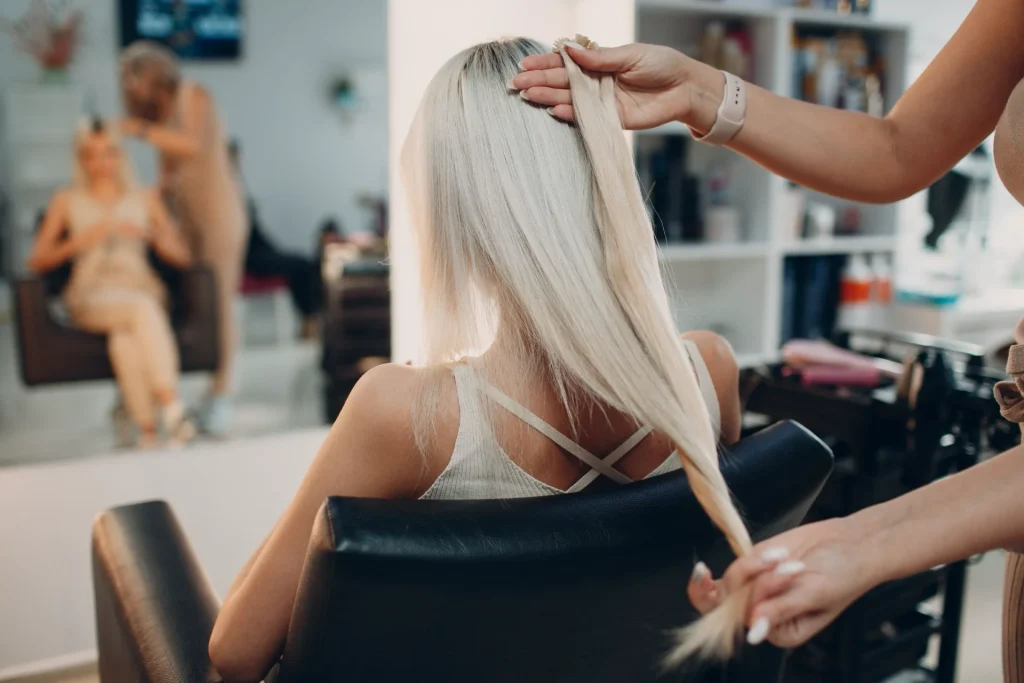
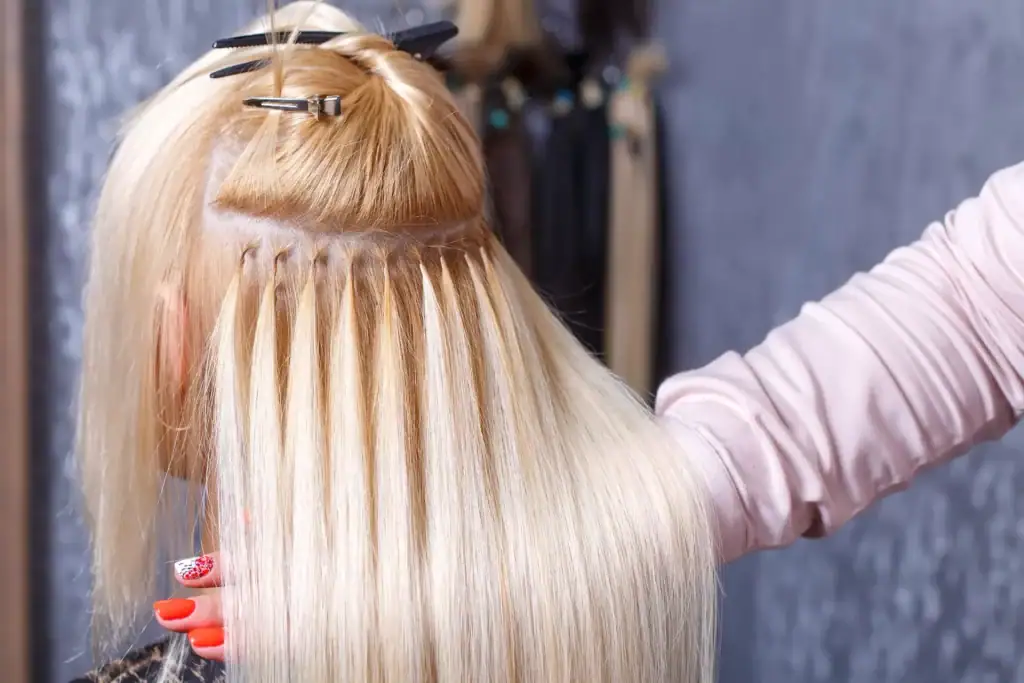
Whether they have naturally thick hair or not, most celebrities use extensions to achieve the effect of perfect length, volume, and fullness. Hairdressers working in Hollywood often say that upgrading is standard practice even when the hair looks great.
What are the benefits of hair extensions?
An upgrade is not only an aesthetic accessory, but it can also be a practical solution to many of the challenges you have with your hair.:
- Thin and thin hair
- Hair that grows slowly and poorly.
- Hair that has recently been cut, and now you want to have a longer haircut
In these cases, the upgrade can be a quick and effective solution that has a great visual effect that is seen immediately – the hair looks denser, healthier and more stylish.
Also, many women use hair extensions to experiment with a variety of hairstyles and lengths without permanent changes, which is perfect for weddings, celebrations, photo shoots or important events.
But there's the other side of the coin
As with most beauty solutions in the world, there is a potential risk when it comes to hair extensions. The most common problems include damage to natural hair, hair loss due to the severity of the extensions, and irritation or discomfort on the scalp.
Another important item is the price. A quality upgrade can cost hundreds of euros and often requires regular maintenance. In addition, after a certain time it can become psychologically difficult to return to the natural look, as a person gets used to the "perfect" hair that the extensions provide.
That is why it is important to make an informed decision and choose the right method of upgrading – according to your hair type, budget and desired effect.
Here are a few types of hair extensions which are most commonly used.
Clip-in extensions (with clips)
These extensions are an ideal start for those who are trying the upgrade for the first time. They do not require professional installation and can be put on and taken off at home in just a few minutes. Their biggest advantage is flexibility – you can only use them when you want, without lasting effect.
Also, the clip-in variant is more affordable, making it available for a wider range of users. Nevertheless, it is recommended that the hairdresser trim them for the first time and show how they are set correctly, in order to make the appearance as natural as possible.
Keratin extensions (hot fusion)
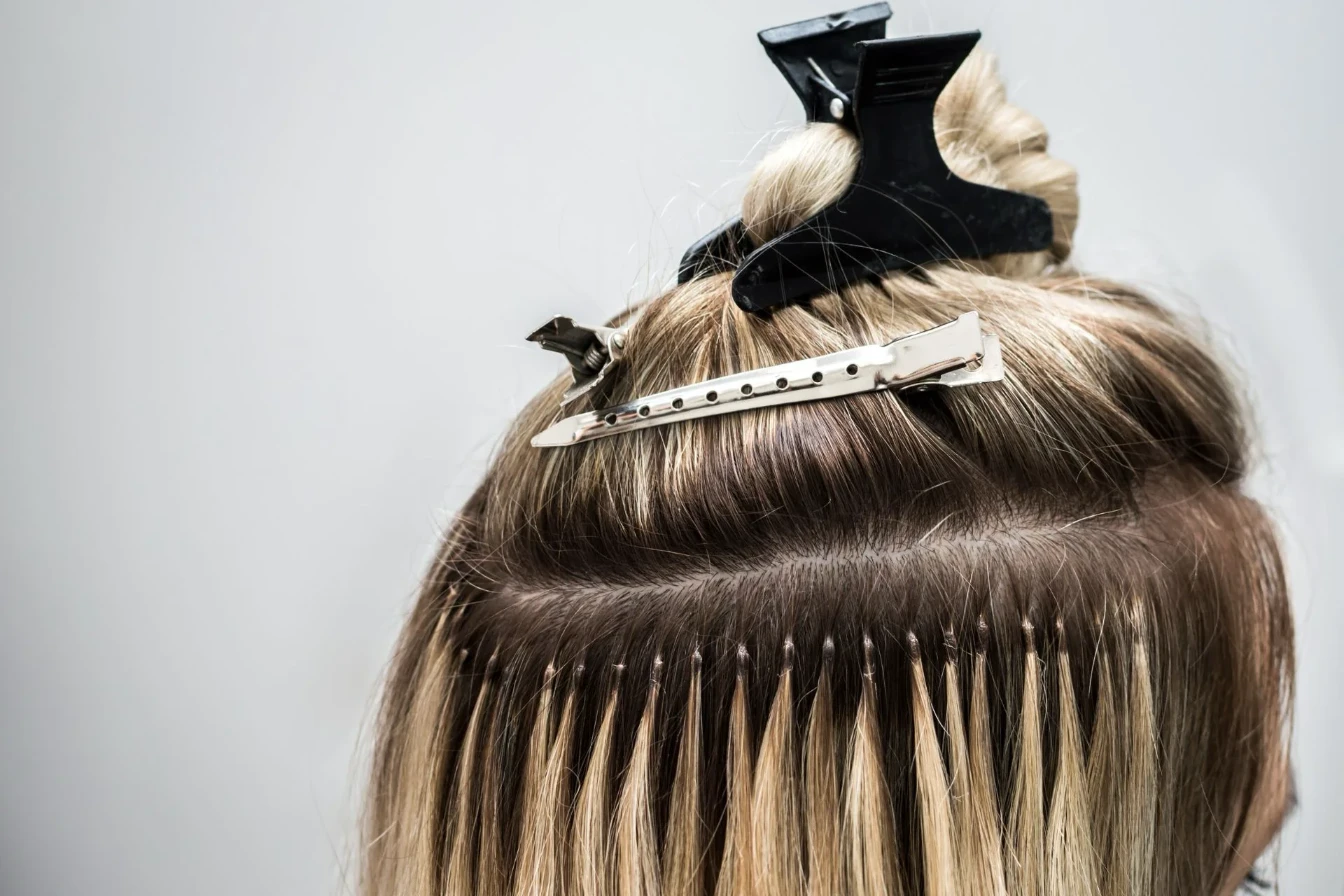
Keratin extensions are among the most popular and durable methods of upgrading. The strands have a keratin tip that is heated and” melted " using a special apparatus, and then formed around your natural hair. After cooling, the keratin hardens to form a strong, long-lasting bond.
This method lasts from three to six months and is ideal for thin hair because each extension is carefully combined with your natural hair. Nevertheless, the installation and removal must be done by a professional, as improper removal can seriously damage the hair.
Micro ring (micro link)
These extensions are set strand by Strand and fixed using small rings that are "squeezed" around the natural hair. The rings have an inner coating that allows for better grip, especially in thin hair.
The advantage is that they do not use glue or heat, but it is important that they are set by a specialist. Regular maintenance is required, as the Rings shift as the hair grows and must be corrected approximately every 6 weeks.
Weft extensions (sewing in braids)
These extensions are often referred to as hair curtains. The hairdresser first weaves natural hair into thin braids (most often alongside head themes), and then the extensions are sewn into those braids. It takes more than one segment to get a natural and uniform look.
This method is popular among people with thick hair and is often used in afro hairstyles. It is not recommended for weak and thin hair due to the weight and pressure on the root.
Tape-in extensions
Tape-in extensions are a more modern solution that installs quickly and does not burden themes. Each strand has a adhesive tape that is simply pressed against the natural hair. The procedure takes about an hour and does not require high temperatures or pressure.
The disadvantage is that the strips are glued horizontally and can be seen when the hair is tied in a tail or bun. They are ideal for those who wear their hair loose or slightly styled.
Halo extensions
This is one of the least invasive methods. The extensions are attached to a transparent, flexible strip that is worn like a riff – without gluing, heating or sewing. When they are installed correctly, they” merge " with your hair and look completely natural.
The hairdresser will cut them once and shape them to fit your hair, and then you can wear them yourself whenever you want. They are ideal for occasional use and do not damage the hair.
Extensions can be made from:
- Synthetic hairit can't be worn or worn, but is ideal for occasional use. The surface is often coated with silicone, so it looks great until that layer is washed away.
- Human hair, which is more natural, longer-lasting, and can be styled with heat devices. We divide it into:
- Remy kosa - high quality, untreated, with preserved cuticles. It looks natural and soft, but be sure to check the origin, because the term "Remy" is not strictly regulated.
- Ordinary human hair it may have been treated with dyes or chemicals, so it's less time-consuming. However, it is still a better option than synthetic hair if you plan to use it more often.
Can an upgrade damage your hair?
Unfortunately, yes. The most common causes of damage are too heavy extensions that pull natural hair and cause cracking, as well as too aggressive extensions, especially with sewn or tightly glued extensions.
This kind of stress can lead to traction alopecia a condition in which the hair begins to fall out due to constant pulling. The most affected area is the area around the forehead and temples.
That is why it is important to correctly choose the type of upgrade according to the quality of your hair, regularly visit the hairdresser for maintenance and remove extensions in a timely manner if you notice signs of damage.
An alternative to damaged hair
If you notice that your hair is damaged or thinned, a good way to cover it up are Toppik Hair fiber. These keratin fibers are sprinkled over thin areas of the hair and visually increase the density. They are especially effective for hairline, parting and themes.
In addition to Toppik fiber, root strengthening treatments are also recommended, as well as supplements rich in biotin, zinc and B vitamins.