



If your hair seems to have been the most beautiful in your life during pregnancy, and then a few months after giving birth everything turned upside down, you're not the only one. Hair loss after childbirth is common and in most cases is temporary, but this does not mean that it is easy to look at the strands on the brush, in the drain or on the pillow.
The good news is that while you wait for the growth cycle to stabilize naturally, there are very concrete ways to make your hair look denser, Fuller, and more vibrant today. In this guide, we explain why hair loss after childbirth occurs, how long it lasts, what you can do to reduce breakage, and how to visually restore volume.
The main reason for hair loss after childbirth is hormones, primarily a sharp drop in estrogen. During pregnancy, elevated levels of estrogen prolong the growth phase of hair, so the hair looks denser, brighter, and slows down more slowly. After childbirth, hormones return to the previous level and a large number of hairs at the same time go into the resting phase (telogen). A few months later those hairs fall out, which explains why the decline does not occur immediately, but with a delay.
It is important to understand that during this period, you do not actually lose all your hair, but those hairs that would naturally fall off during pregnancy if the hormones did not prolong their growth phase. That's why hair loss may seem more intense than usual, but it's essentially part of the normal hair restoration cycle.
Lack of sleep, physical recovery, and mental stress can further exacerbate hair loss in women during this period. It is not a sign that you are doing something wrong, but a natural reaction of the body trying to distribute energy and nutrients where they are most needed.
When the body is under stress, vital functions and recovery become a priority, while hair growth temporarily falls into the background. It is therefore important, as much as possible, to find small moments of rest, as even minimal stress reduction can contribute to stabilizing the growth cycle.
After childbirth, especially if there is heavy bleeding or meals are irregular, there is more often a lack of iron, vitamin D, zinc and protein. It may not be the main cause of hair loss after childbirth, but it can affect the quality of new hair and the speed of recovery. Although breastfeeding is often cited as a cause, in practice hormones, exhaustion, and nutritional needs are far more significant factors.
When the body receives adequate nutrients, the new hair that grows is usually stronger and more resistant. Therefore, the postpartum period is the ideal time to focus attention on a balanced diet and make up for any deficits.
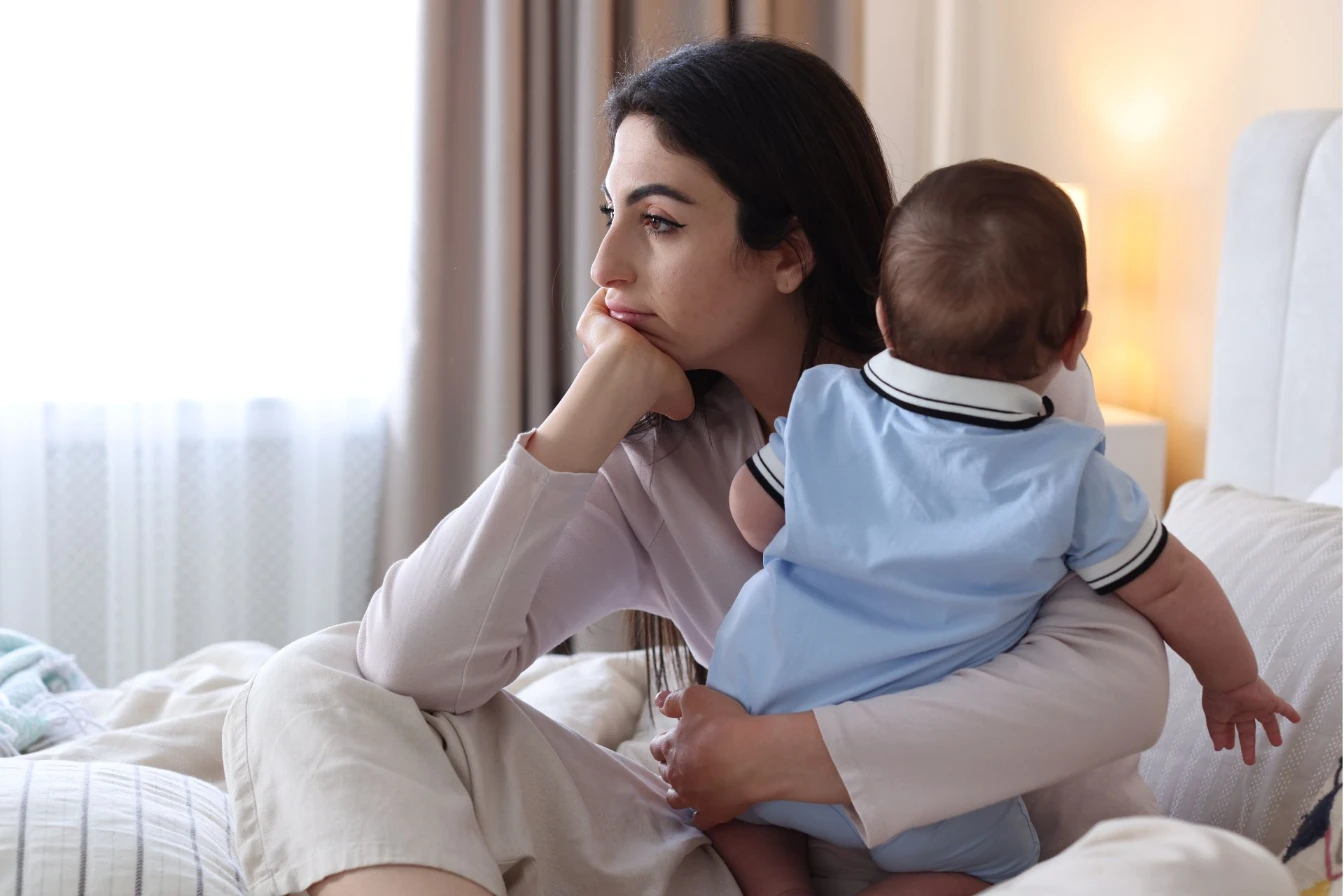
In most women hair loss after birth. it begins around the third month, is most pronounced between the third and sixth months, and then gradually weakens. In most cases, stabilization occurs between six and twelve months.
A good sign of recovery are short new hairs along the forehead, on the scalp or around the parting. Although they may appear disorderly because they protrude, they actually show that the growth cycle is active again.
Special attention should be paid if hair loss after childbirth lasts for more than a year without improvement, if there are clearly limited seals without hair, severe itching, redness or pain on the scalp, or if there are symptoms suggestive of anemia or a thyroid disorder.
This part is most important when you want your hair to look better while hair loss it's still going on.
Hair often makes the biggest difference. A longer bob with slight layers gives the impression of fuller hair because it does not stick to the head. A gradual haircut around the face can relieve thinning along the temples, while gentle bangs help to mask a thinner line along the forehead.
A simple change of the partition, especially from the middle to the side, can immediately reduce the visibility of thinning. An additional trick is to dry the hair with a parting on the opposite side, and only then return it because that way The Root will remain naturally raised.
The goal is not to strain your hair, but to make it light and uplifted. Lighter volume shampoos and balms applied only to the ends usually give a better result than rich formulas applied from the roots. Foam for volume in a small amount can lift the root, while dry shampoo occasionally gives the effect of additional fullness.
On the other hand, heavy masks, oils, and too much serum on the scalp often have the opposite effect and can make the hair look even thinner.
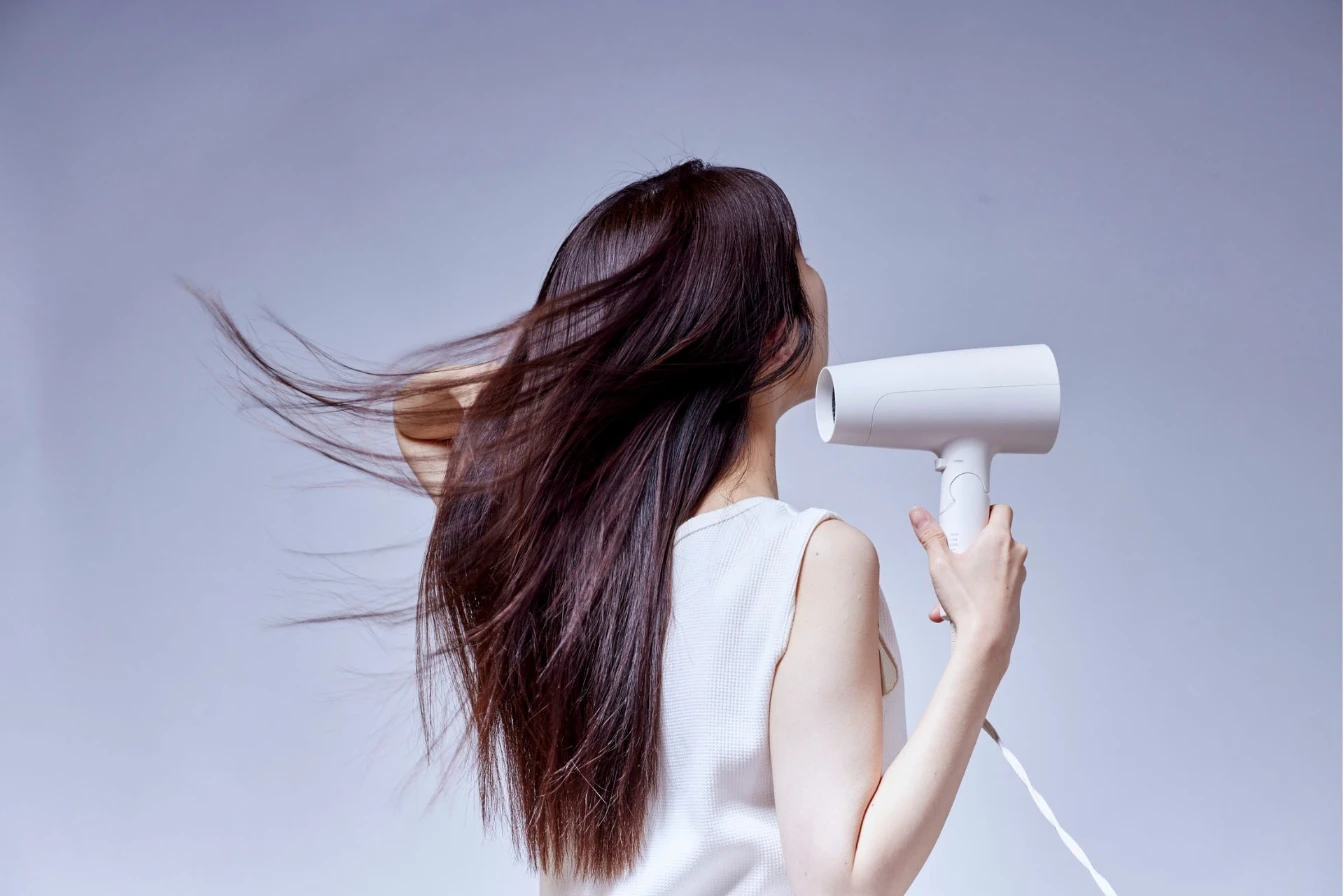
The method of drying has a huge impact. After gently squeezing with a towel, a small amount of foam along the root and drying in the opposite direction of hair growth can significantly raise volume. Finishing with cooler air helps to maintain the shape.
If you want an additional effect for a special event, a few large curlers on the top in ten minutes can give the appearance of a professional blowtorch.
When the goal is to taste the hair in a few minutes, keratin fibers they are a practical solution, especially for division and topics. They are applied to dry hair after styling in a small amount, and then slightly fixed with a spray. Although they do not solve the cause of hair loss after childbirth, they can significantly improve visual impression and self-confidence.
A particularly popular solution for quickly masking thin areas are Toppik keratin fibers. These are microscopic fibers made of keratin, which, thanks to static electricity, bind to existing hairs and instantly create the impression of denser, fuller hair.
When they're properly, the fibers blend with the natural color of the hair and they give a very discreet, natural effect with no sense of weight or blindness. This is especially useful in the period when hair loss after childbirth is most affected by the parting, themes, or forehead line.
The great advantage of Toppik fibers is that they provide an immediate solution without aggressive treatments and without burdens on topics, which is important while hair loss lasts after childbirth. They can be used daily, easy to rinse with regular washing, and are available in multiple shades to achieve a perfect fit with natural hair color.
The diet can't stop hair loss immediately after childbirth because the process is primarily hormonal, but it can support the quality of new hair. Regular protein intake through eggs, fish, meat or legumes provides the building material for the hair. The combination of iron and vitamin C helps better absorption, while omega-3 fatty acids, zinc and selenium support the health of the scalp.
Even simple, regular meals rich in protein and vegetables can have a long-term positive effect on the growth and structure of new hair.
When it comes to vitamins for hair, biotin, B-complex, vitamin D, zinc and iron are most often mentioned. Viviscal women supplements. However, before the introduction of supplements, it is advisable to check the laboratory values and consult a doctor, especially during the period of breastfeeding.
Although it is unpleasant, hair loss after childbirth is a transient process for most women. While you wait for the growth cycle to stabilize, focus on gentle but effective care and volume tricks. Changing the separation, proper drying and, if necessary, cosmetic solutions such as keratin fibers can give the effect of denser hair so that you can feel stunning again while the body is in the process of recovery.
In the event that hair loss after childbirth lasts for an unusually long time, worsens, or is accompanied by inflammation, itching and clearly limited areas without hair, we advise consulting a doctor.
A dermatologist or trichologist can review topics, suggest laboratory analyses such as ferritin, TSH, or vitamin D if necessary, and help rule out other causes of thinning. If there is an additional cause such as anemia or thyroid disorders, timely treatment can significantly speed up the return of hair density.