Hair styling can be a fun, but sometimes frustrating experience. Many wonder how to achieve the desired appearance without damaging the hair. Fortunately, there are simple rules that can help maintain the health and beauty of hair styling. The basis of styling hair is very simple: proper washing, drying and protection of hair from heat are necessary for any further styling of the hairstyle. If you dye your hair, this should be added to the use of special shampoos and conditioners for colored hair, as well as regular shortening of the tips. In this article, we will explore the key rules for styling hair that will help achieve the desired look, while preserving its health and beauty.
Determining the type of hair
There are four basic types of hair: straight, wavy, curly and curly. To determine your typekeep an eye on your hair when it is completely dry and without any products.
- Straight hair does not have visible waves or curls.
- Wavy hair has mild S-shapes.
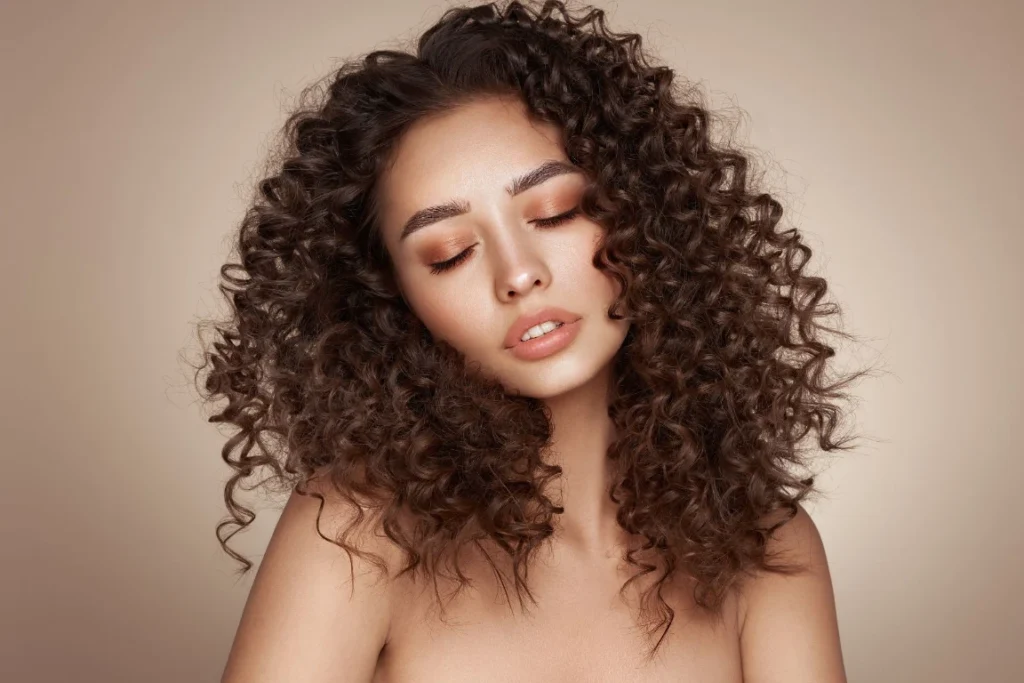
- Curly hair forms defined spirals.
- Curly hair has very thick, narrow curls.
In addition to texture, it is important to determine the thickness of the hair – fine, medium or thick. Take one strand and estimate its thickness with your fingers.
How to adjust the style of hair type
- For straight hair, a common goal is to add volume. Oil-free gels and products are ideal for this type of hair.
- On the other hand, wavy hair often needs the definition and control of static electricity.
- Curly hair requires hydration and products that define curls, while curly hair requires intense moisture and techniques that reduce breakage.
In terms of hair thickness, fine hair can look greasy faster, so it needs light styling, and hair that has thicker hairs often requires stronger products to tame it.
Proper washing and preparation of hair
Washing your hair too often can dry out your scalp, so it's important to find the right balance. Most people wash their hair 2-3 times a week. When washing, use lukewarm water and gently massage the scalp. Avoid too hot water as it can damage the scalp and hair itself.
Recommendations for products by hair type
- For oily hair, light gels and foams are ideal that will not put additional strain on the hair.
- Dry hair requires moisturizing creams and serums to nourish it.
- Curly hair responds best to products with defining ingredients that emphasize natural waves.
- The thin hair is good products for volume, while thick hair likes Rich styling creams.
- For straight hair, smoothness sprays do wonders.
Use of protective equipment before the use of heat tools
Before using a hair dryer, press or Figaro, be sure to apply a thermosetting spray or serum. These products create a barrier between hair and heat, preventing damage and drying. Choose a protective agent with natural oils such as argan or coconut. Apply them evenly from the middle to the ends of the hair. For additional protection, use a leave-in conditioner before applying thermosetting.
How not to load hair with preparations
The rule of "less is more" is crucial when treating hair because excessive products can make hair heavy and oily. Start with a small amount and add as needed. For fine hairs, use spray products, while denser hair better tolerates creams and pomades. When applying, always place the product on your fingers and palms first, and then apply it to your hair.
In addition to the proper use of certain products and thermosetting, it is also important what methods you apply to shape your hair.
Straight hair
Straight hair can often look flattened and lifeless. To achieve volume, use products that lift the root. Start with shampoo and volume balm. The reverse-drying technique is very effective. Tilt your head and dry your hair from the roots to the ends. Use a round brush for additional lifting. Textured sprays and powders are great for adding flutteriness. Apply them to the root and rub gently. For the final look, use figaro for light waves or flatten individual parts to achieve contrast.
Thin hair
Thin hair requires a gentle approach, and the way you cut it can help a lot in styling. The technique of step-cutting can create the appearance of denser hair. When drying, use a small round brush to lift the roots. Experiment with the partition because changing the position can add volume. Also, dry shampoo is great for refreshing between washing and adding texture.
Curly hair
Curly hair requires a lot of hydration, as well as careful styling of natural curls. This is aided by the kneading technique. Gently squeeze the hair upwards while it is moist and dry with a diffuser at a low temperature to avoid the frizz effect. For defined arcs, use the finger coiling technique. Wrap the strands around your finger while they are moist. Avoid combing dry hair and use your fingers to separate curls.
I like the hair
Thick hair can be very challenging to shape. Start with a volume-controlling shampoo and conditioner, and then apply a smoothing serum to moisturized hair. If you want a smooth hairstyle, use large brushes and a strong hair dryer. Dry your hair in parts, tightening it down. Iron smoothing can help control volume. For hair with texture, try the "twist and clip" technique. Twist the damp strands and fasten them with clamps. After drying, release to get soft waves.
Thinned hair
Thinning hair should be listed as a special category because styling it can be a real challenge depending on the degree of thinning. Keratin hair fibers they are an effective way to add volume and density effect to thinned hair. These fibers are made of keratin, which is a natural protein similar to that found in human hair. Thanks to its structure, keratin fibers are easily attached to existing hair, giving the hairstyle volume and fullness. The fibers are applied by spraying them on thin sections of the hair, and then gently shaking it to evenly distribute it. The electrostatic charge of the fibers allows them to adhere tightly to the hair, thus ensuring durability and resistance to moisture, sweat, and wind. Keratin fibers are available in different shades, which allows for a perfect fit with natural hair color. This is especially important for maintaining the natural look of the hairstyle.
The Shape of the face
A hairstyle can highlight the shape of the head in a positive or negative way, depending on how you style your hair. It is important to know which hairstyle suits which shape of the head, to emphasize your facial features in the best possible way.
Hairstyles that fit the different shapes of the face
- Long, layered hairstyles with slight waves around the face are a great choice if you have a round face shape.
- With an oval face shape, most hairstyles fit well. Nevertheless, bob hairstyles especially flatter this form.
- The square face is matched by soft, rounded lines that soften the sharp corners of the jaw. Medium-length hairstyles with soft waves or layers around the face are ideal.
- The heart-shaped face looks nice with hairstyles that add volume to the bottom, such as long hair with slight waves or bob hairstyles to the chin.
Longer, hair-like bangs soften the features of the square face, while flat, dense bangs accentuate the cheekbones of the round face. The degrees add volume and texture, which is useful for balancing proportions. Shorter layers around the face soften the sharp features, while longer layers elongate the round face. Hairstyles with volume on top of the head visually extend the face, and the split can change the perception of The Shape of the face. The central section emphasizes the symmetry of the oval face, while the side section balances asymmetrical features and softens the corners of the square face.
Heat styling tools give great results in a short time. However, they can be very harmful to your hair if you don't use proper protection.
Fens, presses and figaro
Before using these tools, always apply the Heat Protection Product first. When using the hair dryer, keep it at a distance of 15-20cm from the hair and constantly move it. When you iron your hair, divide it into thin strands and only go through each one once. The temperature should not exceed 180°C for thin hair, or 200°C for thick hair. In the case of Figaro, wrap the strand around the tube and hold for 5-10 seconds, depending on the thickness of the hair. Let the curls cool before combing for a longer-lasting effect. Choosing the right brush or comb can make it much easier to achieve a certain effect, especially when it comes to volume. Curlers are great for creating natural waves. Place them on moist hair and let it dry naturally or with the help of a hair dryer. Larger curlers give more relaxed waves, while smaller ones create tight curls. For a smooth hairstyle, use a straight brush in combination with a hair dryer. Pull it down your hair while directing the warm air down.
Hair care
For starters, it is important to use products that fit your hair type. Dry shampoo is a great way to refresh your hair between washes. Use a silk pillowcase at night because it reduces friction and prevents hair from breaking during sleep. Avoid frequent combing. Instead, use your fingers to gently comb your hair to preserve the shape of your hairstyle.
Regular haircut
It is recommended to visit the hairdresser every 6-8 weeks to shorten the tips, even if you want to let go of your hair. Removing the damaged ends prevents them from tearing. This allows the hair to grow healthier and stronger. Regular haircuts help maintain the shape of the hairstyle, especially with shorter hairstyles. It prevents the hair from losing its shape and looking messy. During a visit to the hairdresser, ask for advice on the best products for your hair care. Professionals can recommend treatments that will help maintain a healthy and beautiful hairstyle.
Hair styling helps you to find your own expression.
Hair styling requires practice and patience. Anyone can find the perfect hairstyle for themselves, regardless of the type of hair or The Shape of the face. Experimenting with different products and techniques is key in finding the right style solution for your hair. You can find inspiration all around you. The trends of the 1990s come back and provide a host of interesting ideas. The most important thing is to feel confident with your hair. Experiment, have fun and find the style that best reflects your personality.